How has nursing changed over the years?
May 22, 2025

Nursing is often described as the backbone of healthcare. A profession rooted in compassion, care, and clinical expertise. While these core values remain unchanged, the practice, perception, and possibilities of nursing have transformed dramatically over the decades. From its origins as informal caregivers to its modern status as a respected, specialised profession, nursing has continually adapted to meet the changing needs of society.
Before the 19th Century, nursing was largely informal and often performed by family members, religious orders, or community caregivers. There was no formal training, and the role was not considered a profession. Care was driven by duty, charity, and in many cases, necessity, especially during times of war or public health catastrophe.
The turning point came in the mid-1800s with Florence Nightingale, the Lady with the Lamp, who is widely regarded as the founder of modern nursing. During the Crimean War, she introduced strict hygiene practices and patient care protocols that dramatically reduced mortality rates. After the war, Nightingale established the first scientifically based nursing school, eponymously named the Nightingale School of Nursing in London, which paved the way for nursing to become a formal, structured profession rooted in the twin principles of education and public health.

The 20th Century brought rapid advances in medicine, leading to new expectations and roles for nurses. First amongst these was the adoption of formal education and licensing, with governments and medical institutions around the world regulating nursing through exams, certifications, and professional associations. Nursing schools also became affiliated with hospitals, offering hands-on learning in patient care.
By the 1950s, nursing began expanding into specialised roles, such as midwifery, anaesthetics, and mental health and from the ‘70s onward, nursing education shifted from hospital-based programs to university degrees. This change reflected the growing complexity of the role and the need for deeper clinical knowledge, leadership skills, and research capacity. By the turn of the century, Nurse Practitioners began taking on expanded responsibilities, including diagnosing, prescribing, and managing patient care.
Today, nurses are often leaders in interdisciplinary teams, researchers in clinical trials, educators, and health policy advocates.
The new millennium has seen an explosion in medical technology, and nurses are at the forefront of integrating those advances into care. From electronic health records to telehealth, remote monitoring, and AI-supported decision-making, today’s nurses must be as tech-savvy as they are clinically skilled.
Technology has also continued the augmentation and development of how nurses are trained, with simulation labs, online learning, and virtual reality offering new ways to build both skills and experience.
As populations age and chronic diseases rise, the demand for nursing care is growing worldwide, however, many health systems face a critical nursing shortage.
According to the World Health Organisation (WHO), there is an estimated shortage of over 6 million nurses globally. This shortage is most severe in low and middle-income countries, where health systems are often under-resourced, and the burden of disease is high, but in high-income countries, the situation is also urgent.
Ageing populations, increased demand for chronic and long-term care, and too many experienced nurses leaving the profession, are all straining the system. Locally, both Australia and New Zealand continue to project critical nurse shortfalls in the coming decade unless urgent action is taken.
So, what should we be doing about it?
Firstly, governments and private sector organisations must expand training programs, fund scholarships, and ensure sufficient infrastructure exists to educate the next generation of nurses.
Secondly, addressing burnout through better pay, improved staffing ratios, better mental health support, and ongoing career development pathways are essential to keeping more nurses in the profession longer.
Ethical recruitment practices, investment in health systems in lower-income countries, and international collaboration are also important to prevent brain drain and ensure countries have the health workforce they need.
Last, but by no means least, we need to continue the recognition and integration of nurses into health policy and planning both of which will elevate the value and voice of nurses in shaping the future of care.
As we look to the future, nursing continues to evolve in response to global challenges, from pandemics and ageing populations to climate change and artificial intelligence. Yet the heart of nursing remains the same, an ongoing commitment to care.
Share this post

A World Mental Health Day message from Jan Bannerman , Joint Managing Director, Talent Quarter
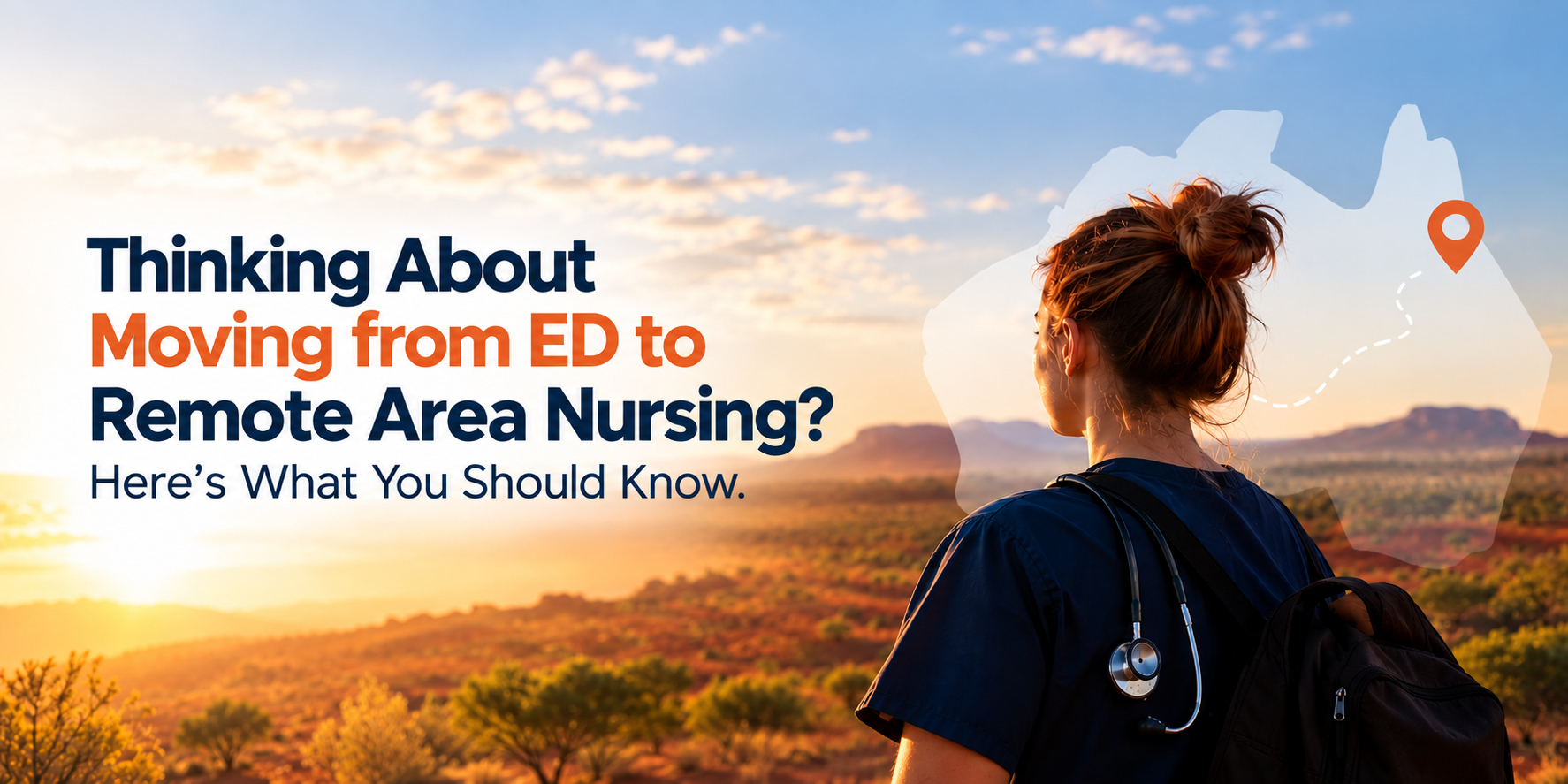
If you've spent a few years in Emergency, chances are you've thought about it. "Could I do remote nursing?"

When our Nurse Alex moved from Northern Ireland to Australia in November 2025 , she wanted to do two things: work as a nurse and make the most of the opportunity to explore Australia. Travel nursing has given her the chance to do both! Making the most of the time between contracts 🐋 After wrapping up a contract, Alex headed to the Gold Coast for some well-earned downtime - which happened to fall right in the middle of humpback whale migration season. “I went whale watching which was incredible. It was peak season for humpback whales migrating down the east coast. There were so many whales!” For Alex, taking a break between contracts isn’t just about travelling. It gives her a chance to properly switch off after working in demanding and sometimes unfamiliar environments. “Contracts can be both physically and mentally demanding at times, and working in unknown environments can be overwhelming. Having time off between contracts has helped me recharge to be ready for the next contract.” Work, travel and a bit more freedom One of the things Alex has enjoyed most is being able to choose contracts that suit her experience and the way she wants to spend her time in Australia. “It’s great being able to balance the work and the holiday aspects of my Working Holiday Visa. As much as I love work, I love being able to see and experience Australia in all of its beauty in my downtime.” It’s also given her the chance to broaden her nursing experience. Alex comes from an ICU background, but since starting travel nursing she’s also worked in ED and on a medical ward. And then there are the places. Instead of only visiting somewhere for a weekend, Alex gets to spend a few weeks living and working there - experiencing smaller towns and parts of Australia she might never otherwise have had the chance to call home. Next stop: Tasmania 📍 Alex has now started a new contract in Tasmania, where she’s looking forward to gaining more ED experience and, of course, exploring more of the state while she’s there. For any nurses thinking about doing something similar, Alex’s advice is pretty simple: “Do it! I was nervous to start travel nursing, but I’m so glad I did it. The team at Talent Quarter supported and guided me throughout the whole way. They are always just a phone call away.” For Alex, it’s that freedom that makes travel nursing so worthwhile. “You could work the full year straight if you want, or take months off at a time to travel. It’s up to you.” A new contract, a new part of Australia and the freedom to decide what comes next. That’s what travel nursing has looked like for Alex so far. Thinking about giving travel nursing a go? Whether you’re ready for your next contract or just curious about what opportunities are out there, we’d love to hear from you . Get in touch with our Talent Quarter team and have a chat about where travel nursing could take you next! Click here: https://www.talentquarter.com/contact-us or get in touch with our consultant, Lewis Dew!