Raising the Standard in Permanent Healthcare Recruitment: Meet Mandy Sheen
Chris O • September 8, 2025
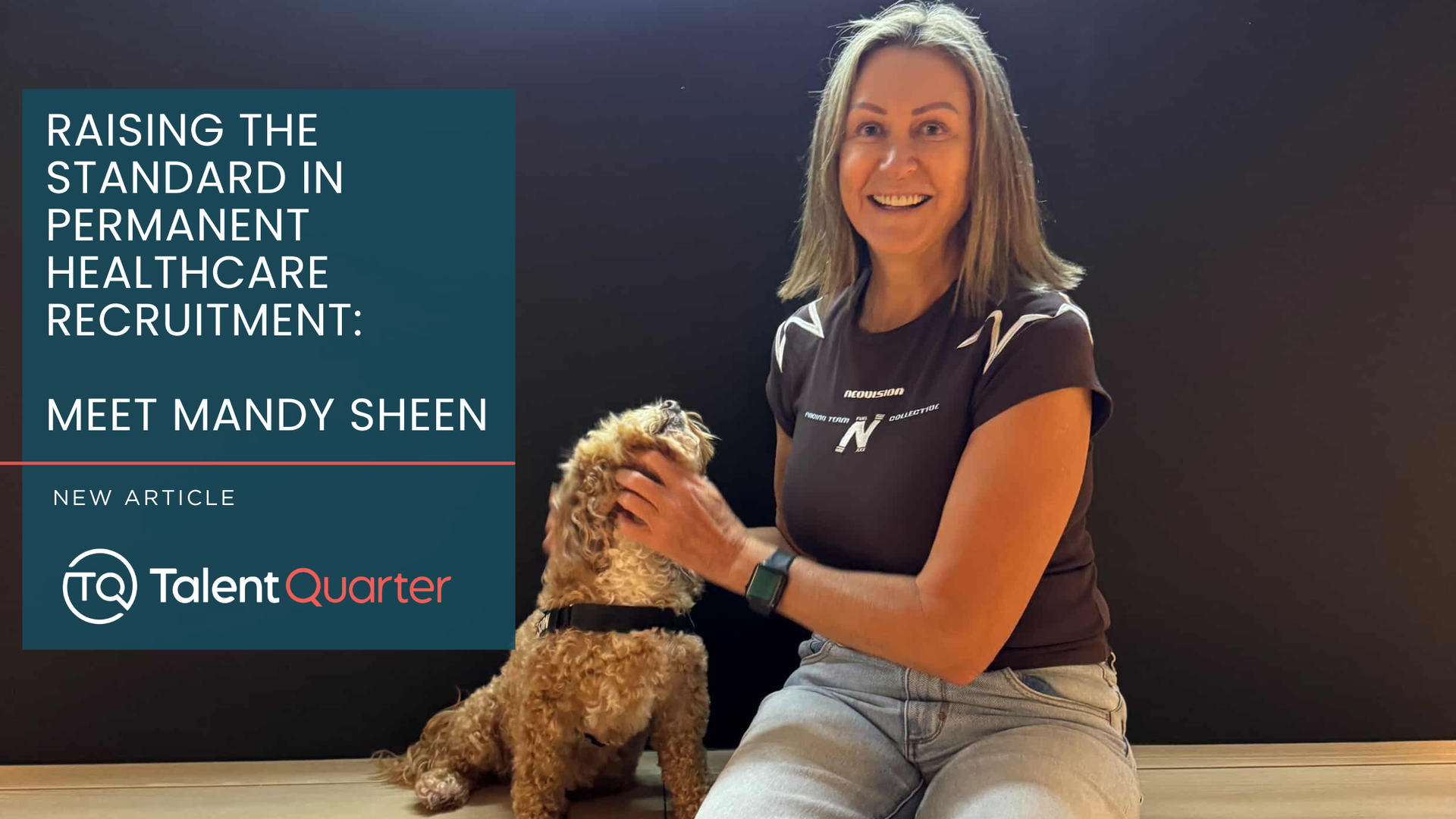
At Talent Quarter, we’re passionate about connecting people with opportunities that truly transform their lives. Our newly appointed Head of Permanent Recruitment, Mandy Sheen, with more than 30 year of experience bringing a wealth of expertise and wisdom to the role.
Mandy leads our dedicated team of permanent recruitment consultants at Talent Quarter who bring specialist knowledge across allied health, social work and mental health, nursing and professional services. Together, they are servicing healthcare organisations across Australia.
Mandy’s appointment marks a pivotal moment for Talent Quarter as we expand our
permanent recruitment offering. With her leadership, and the dedicated team supporting her, we’re setting new standards for how healthcare organisations find, and keep - the right talent. Read on for a short Q&A with Mandy and get to know Mandy a little better.
Mandy, you’ve worked in recruitment for 30 years. What keeps you passionate about permanent placements?
It’s the opportunity to change lives in a truly lasting way. Helping someone secure a permanent role means supporting them in building a long-term career for themselves, security for their families, for me, it’s not just filling a position - that’s what motivates me every day.
Looking back, what’s the biggest lesson you’ve learned as a recruitment specialist about helping people build long-term careers?
Listen. Give options. And listen again. People’s priorities, needs, and wants change throughout their careers, so never assume. That’s also what makes Talent Quarter unique, our team takes time to listen deeply to both candidates and clients. We don’t just match CVs to jobs; we take the time to understand people’s evolving goals and help them grow into roles where they’ll thrive.
How has the recruitment industry changed since you started?
The basics haven’t changed - relationships are still everything. Technology has made us more efficient, but not always in a good way. Skills can be matched by software, but the real key to long-term success is culture fit. That’s something only genuine conversations can uncover.
Mandy’s take for Job Seekers
From your experience, why does a permanent role offer more than just stability?
Because it’s about more than just a paycheck. Permanent roles offer:
- Training and development opportunities
- Mentorship and guidance
- Recognition and reward
- A sense of belonging through teamwork
At the same time, we know that locum and contract roles play an equally important part in healthcare careers - offering flexibility, variety, and the chance to quickly build experience.
A permanent role simply provides another pathway, giving those who want long-term growth the space to invest in themselves and their future.
If you’re considering a permanent move, ask yourself three questions:
- Does this role align with my long-term career goals?
- Does the company culture support my values and growth?
- Is the salary fair, but not the only reason to stay?
What common mistakes do candidates make - and how can they avoid them?
Chasing the $$$. I often meet candidates who are leaving roles due to poor culture, no progression, or lack of training. Then they accept a counteroffer with more money, but money doesn’t solve issues like lack of growth or toxic environments. At Talent Quarter, we coach candidates to think about the why behind their career moves and help them make decisions that align with their long-term future.
If you could give one piece of advice to someone considering a permanent move, what would it be?
Think about what’s really important to you in a healthcare career, whether that’s working in an organisation with a supportive patient-first culture, access to training and professional development, or fair and sustainable pay. Choose a role that allows you to grow your skills and deliver better care, while aligning with your long-term career goals, not just your
short-term needs.
Mandy’s take for Employers
What difference does the right permanent hire make to a business?
The right hire boosts productivity, lifts morale, and drives revenue. A great hire creates a ripple effect across the team - and across patient care outcomes.
What do clients often underestimate about permanent recruitment?
The true cost of the wrong hire - it’s not just financial, it can impact culture, team morale, and patient care. That’s why at Talent Quarter we:
- Take time to deeply understand your business needs and culture
- Use a consultative process that goes beyond skills-matching
- Provide a comprehensive aftercare program to support retention
This approach has already helped our clients save significantly on recruitment costs, while building stronger, more engaged teams.
Where do you see the biggest opportunities for employers to attract great talent?
Open and honest communication. No role is perfect - and that’s okay! Being upfront helps you attract and retain the right people. Also, don’t just try to replicate the last person in the role. The world is changing quickly, and fresh perspectives are what keep businesses relevant. At TQ, we help employers look ahead, not backwards.
Lastly, if you weren’t in recruitment, what career could you see yourself doing?
Sand biologist - as long as it only encompasses lying on the sand at the beach!
The Talent Quarter Difference
It’s that mix of humour and humanity that makes Mandy such a strong industry leader. Her experience shows that while technology may evolve, the heart of recruitment is still human connection, that’s where the impact lies.
As Mandy says:
“If you’re going to do something, do it right. I’m competitive, and I always strive to be the best - for my candidates, my clients, and my team.”
Ready to Grow with Us?
With Mandy leading our Permanent Recruitment division, we’re proud to be raising the standard of healthcare recruitment, strengthening our clients’ teams, creating lasting opportunities for candidates, and making #connectionswithimpact in the communities we serve.
Whether you’re a healthcare professional looking for a meaningful permanent role, or an organisation ready to strengthen your workforce with the right long-term talent, Talent Quarter is here to help.
📩 Get in touch with our Permanent Recruitment team today.
Share this post

A World Mental Health Day message from Jan Bannerman , Joint Managing Director, Talent Quarter

If you've spent a few years in Emergency, chances are you've thought about it. "Could I do remote nursing?"

When our Nurse Alex moved from Northern Ireland to Australia in November 2025 , she wanted to do two things: work as a nurse and make the most of the opportunity to explore Australia. Travel nursing has given her the chance to do both! Making the most of the time between contracts 🐋 After wrapping up a contract, Alex headed to the Gold Coast for some well-earned downtime - which happened to fall right in the middle of humpback whale migration season. “I went whale watching which was incredible. It was peak season for humpback whales migrating down the east coast. There were so many whales!” For Alex, taking a break between contracts isn’t just about travelling. It gives her a chance to properly switch off after working in demanding and sometimes unfamiliar environments. “Contracts can be both physically and mentally demanding at times, and working in unknown environments can be overwhelming. Having time off between contracts has helped me recharge to be ready for the next contract.” Work, travel and a bit more freedom One of the things Alex has enjoyed most is being able to choose contracts that suit her experience and the way she wants to spend her time in Australia. “It’s great being able to balance the work and the holiday aspects of my Working Holiday Visa. As much as I love work, I love being able to see and experience Australia in all of its beauty in my downtime.” It’s also given her the chance to broaden her nursing experience. Alex comes from an ICU background, but since starting travel nursing she’s also worked in ED and on a medical ward. And then there are the places. Instead of only visiting somewhere for a weekend, Alex gets to spend a few weeks living and working there - experiencing smaller towns and parts of Australia she might never otherwise have had the chance to call home. Next stop: Tasmania 📍 Alex has now started a new contract in Tasmania, where she’s looking forward to gaining more ED experience and, of course, exploring more of the state while she’s there. For any nurses thinking about doing something similar, Alex’s advice is pretty simple: “Do it! I was nervous to start travel nursing, but I’m so glad I did it. The team at Talent Quarter supported and guided me throughout the whole way. They are always just a phone call away.” For Alex, it’s that freedom that makes travel nursing so worthwhile. “You could work the full year straight if you want, or take months off at a time to travel. It’s up to you.” A new contract, a new part of Australia and the freedom to decide what comes next. That’s what travel nursing has looked like for Alex so far. Thinking about giving travel nursing a go? Whether you’re ready for your next contract or just curious about what opportunities are out there, we’d love to hear from you . Get in touch with our Talent Quarter team and have a chat about where travel nursing could take you next! Click here: https://www.talentquarter.com/contact-us or get in touch with our consultant, Lewis Dew!